
Keyword: Women
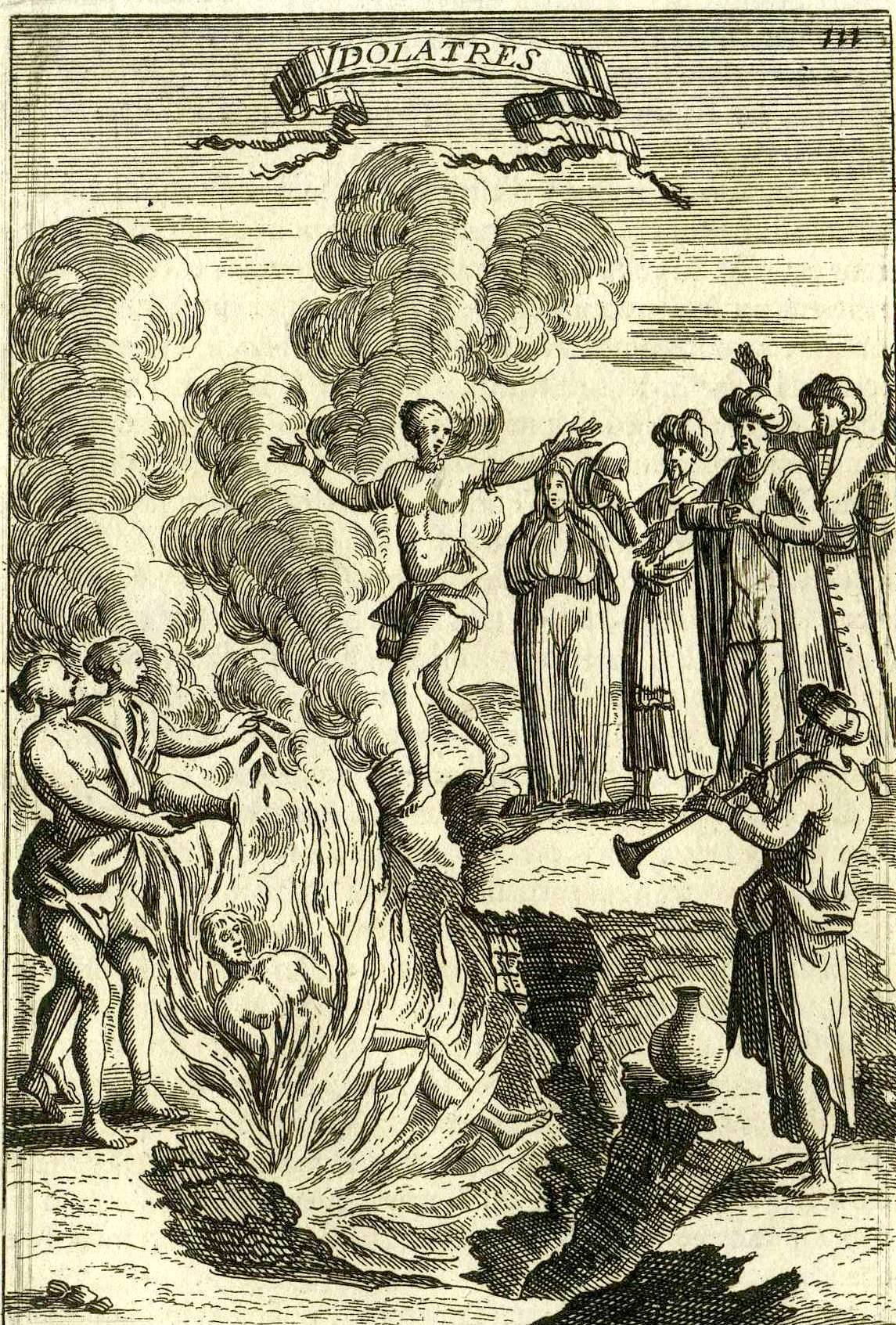
Idolatres (1685)
from: Allain Manesson Mallet, Description de l'Univers, , contenant les differents systêmes du monde, les cartes générals et particulières de la géographie ancienne et modern. Vol.: De l'Asie.
Contentious Traditions: The Debate on Sati in Colonial India
Delhi: Kali for Women, 1989.

A Gentoo Burning Herself (1783)
from: The Geographical Magazine, London, Harrison & Co., 1783
http://www.columbia.edu/itc/mealac/pritchett/00routesdata/1800_1899/hinduism/sati/sati.html
Death and Demonization of a Bodhisattva: Guanyin's Reformulation within Chinese Religion
in: Journal of the American Academy of Religion, v. 84 (2016), issue 3: pp.690-726.
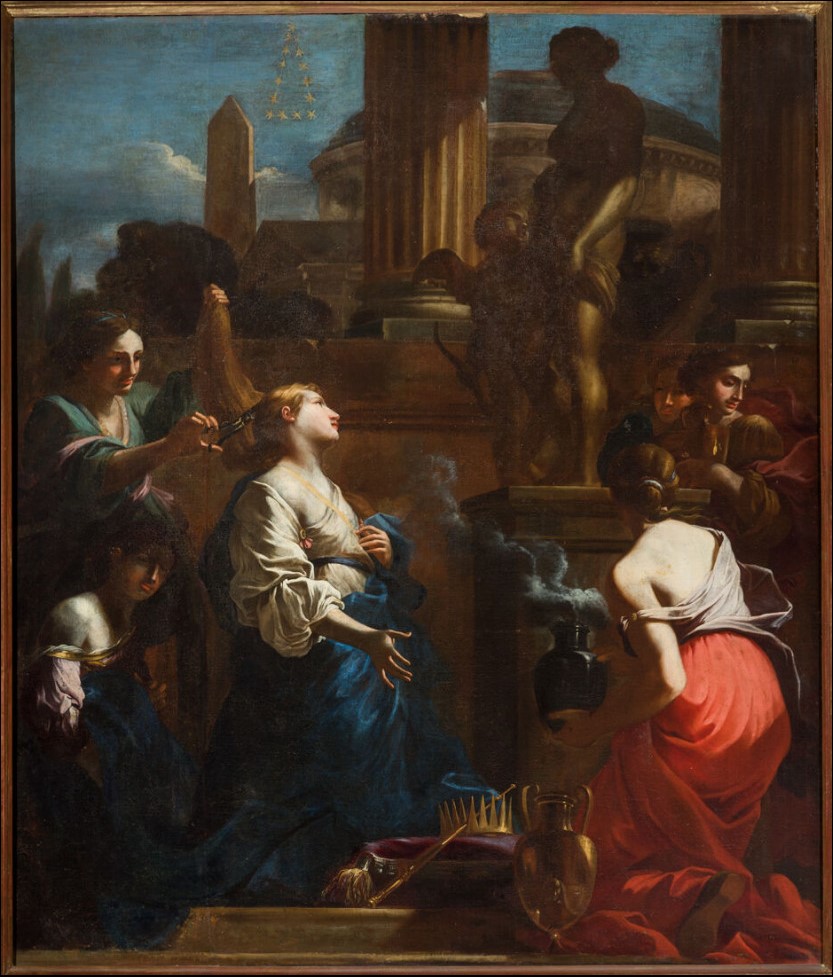
Berenice offers her hair to Venus [1662 - 1663]
Palazzo Reale, Turin
Sati Memorials and Cenotaphs of Madhya Pradesh — A Survey
in: Proceedings of the Indian History Congress, v. 62 (2001), issue --: pp.1013–19.

La figliuola di Iefte all'altare per esser sacrificata (18th Century)
Convento dei Canonici Lateranensi - Gallerie dell'Accademia, Venice
Hindu Infanticide: An Account of the Measures Adopted for Suppressing the Practice of the Systematic Murder by Their Parents of Female Infants; with Incidental Remarks on Other Customs Peculiar to the Natives of India
London: Johnson, 1811.
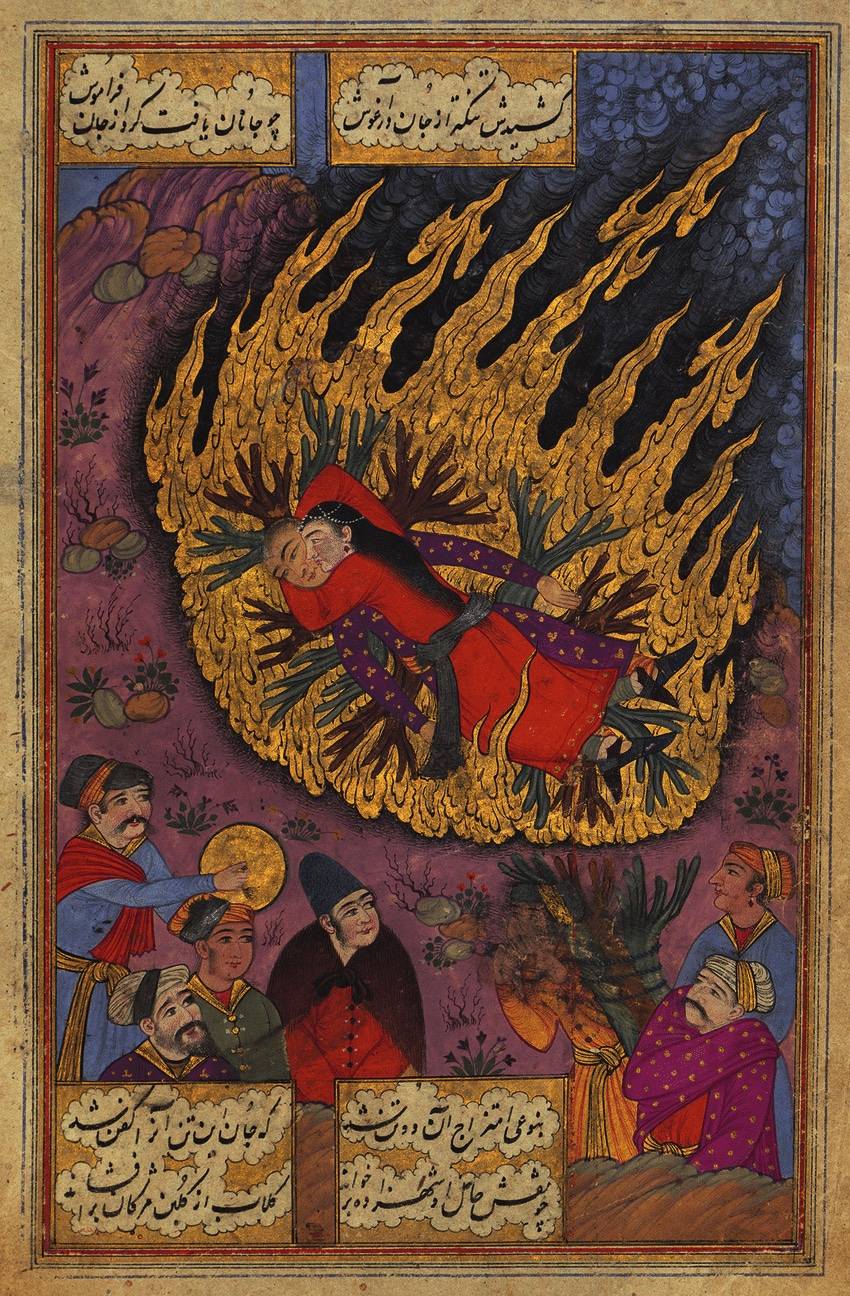
Satī, from a Sūz u Gudāz manuscript. The union of the couple on the pyre (1657)
from: Sūz u Gudāz ms, Iran, Walters Manuscript W. 649, fol. 19b (Burning and Melting)
The Walters Art Museum, Baltimore, Maryland
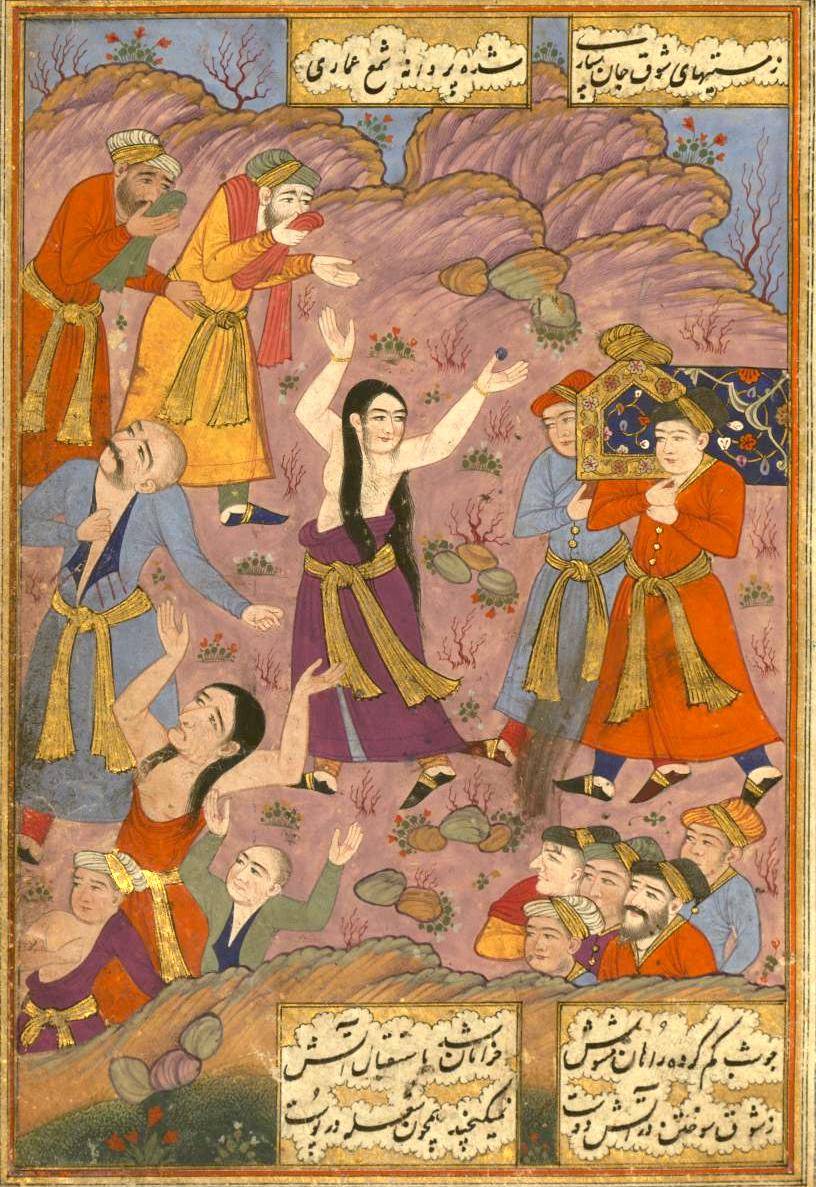
the young Hindu woman accompanies her bridegroom's coffin to the funeral pyre and decides to commit sati (1657)
from: Walters manuscript W.649 (Burning and Melting)
The Walters Art Museum
Sati: A Nineteenth Century Tale of Women, Violence and Protest
in: At the Edge of Psychology: Essays in Politics and Culture, pp.
Delhi: -, 1980.
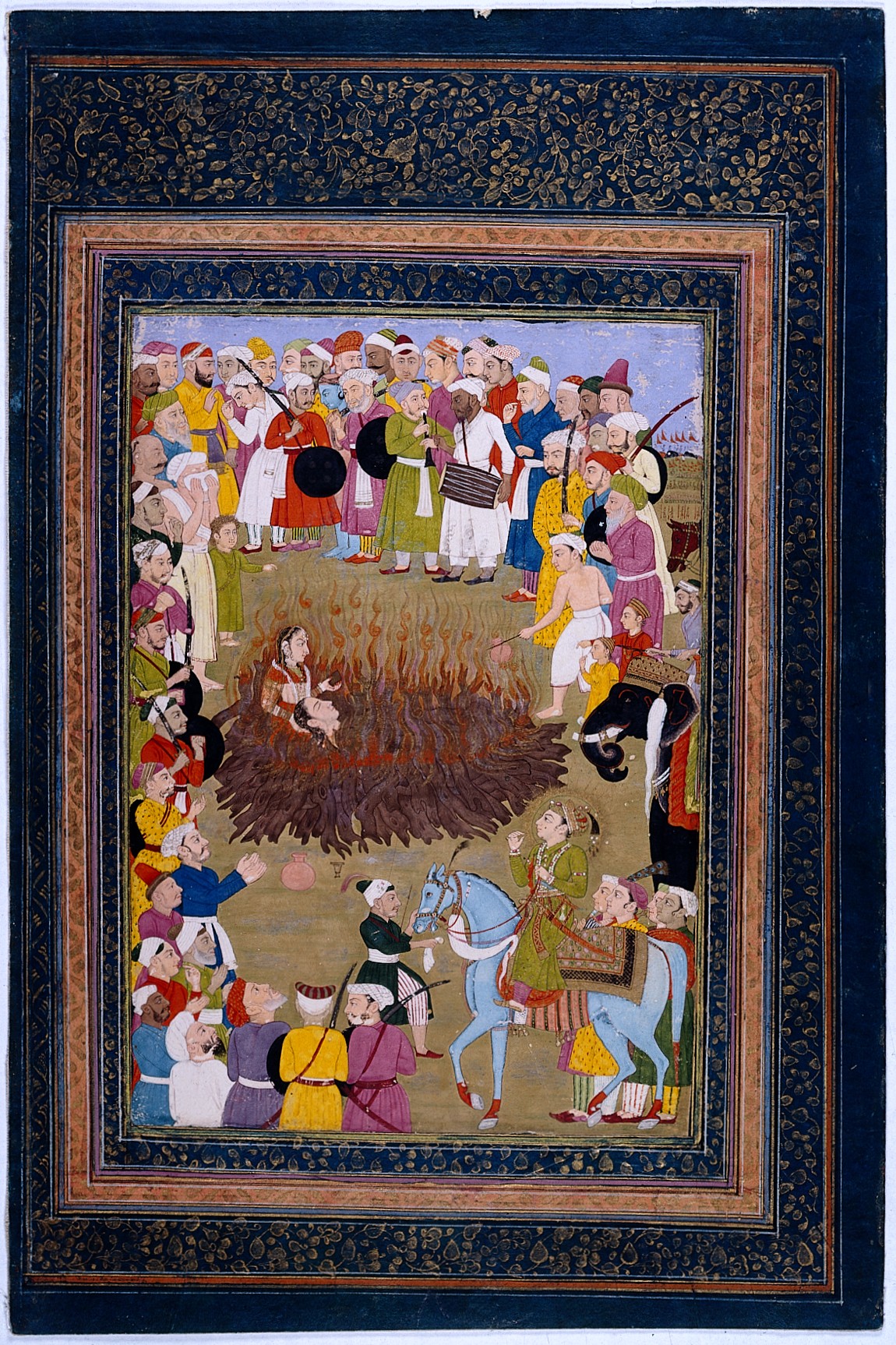
Una india consultó a un echizero famoso, el qual dijo que venía de parte del inga a librar a los indios de la muerte, y pidiéndole remedio para una enfermedad que tenía, la hizo ir a una junta de dos ríos y haziéndole ciertos lavatorios, le dijo que allí se le perdonavan sus peccados que eran los que le havían de dar la muerte, y la hizo ofrecer cerca de cinqüenta animalillos, a manera de conejos, que llaman cuyes, y otros semejantes; después le hizo ofrecer y quemar en una grande oguera un animal grande, que acá llaman carneros, aunque son bien diferentes, y que vestida de su pellejo, adorase un árbol para librarse de la morte.
in: “Monumenta Peruana (Letter from Pablo José de Arriagato Claudio Acquaviva), Rome, 1970, vol. 6”
ì: , 1594.

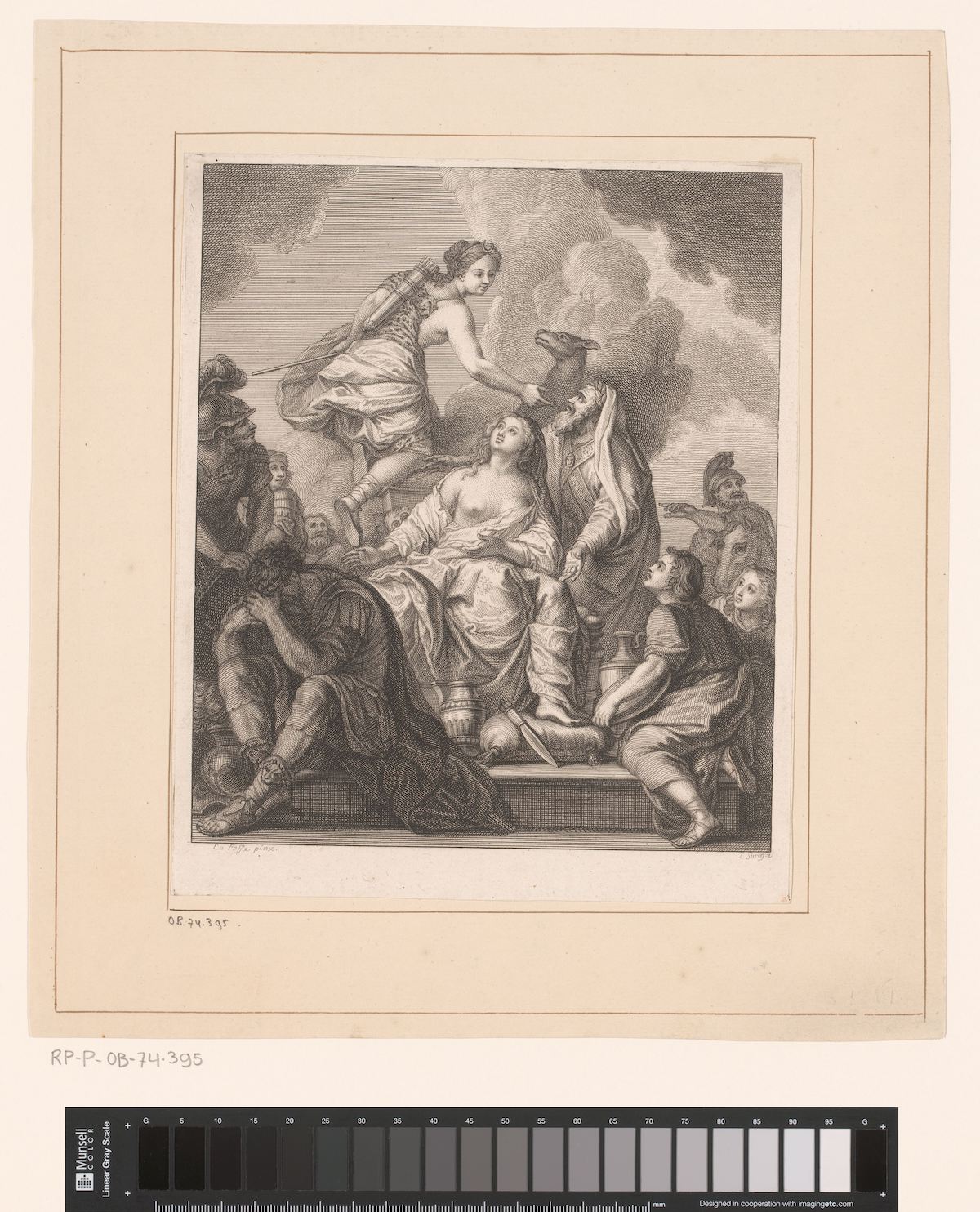
Sacrifice of Iphigenia [1602 - 1607]
from: Salsmann, Wilhelm. P. Ovid Nasonis XV Metamorphoseon librorvm figurae elegantissime a Cr[i]spiano Passaeo laminis aeneis incisae: quibus subiuncta sunt epigrammata latine ac germanice conscripta, fabularum omnium summam breviter ac erudite comprehendentia, Cologne, Joannem Jansonium, 1607
Rijksmuseum Amsterdam
An Eighteenth-Century Account of Sati: John Zephaniah Holwell's ‘Religious Tenets of the Gentoos’ and ‘Voluntary Sacrifice’ (1767)
in: South Asia: Journal of South Asian Studies, v. 40 (2017), issue 1: pp.24-39.
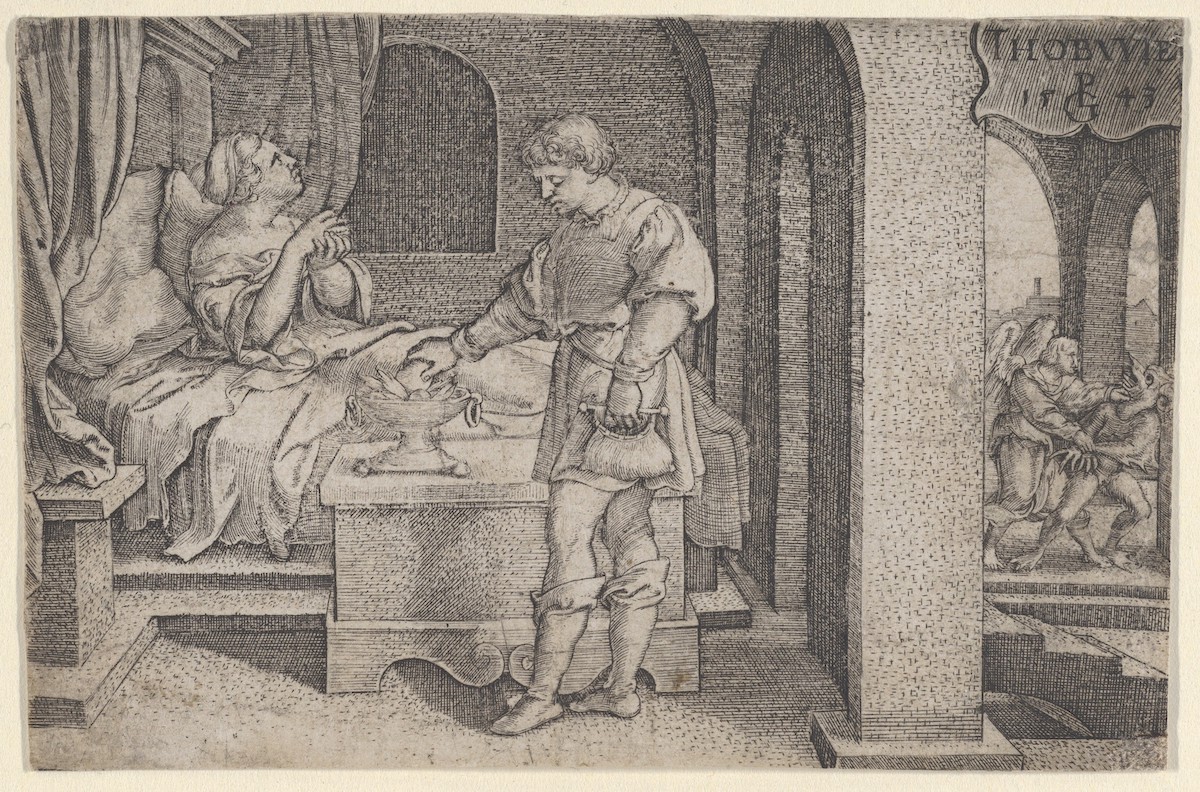
Tobiolus Makes a Propitiatory Sacrifice (1543)
Metropolitan Museum of Art, New York
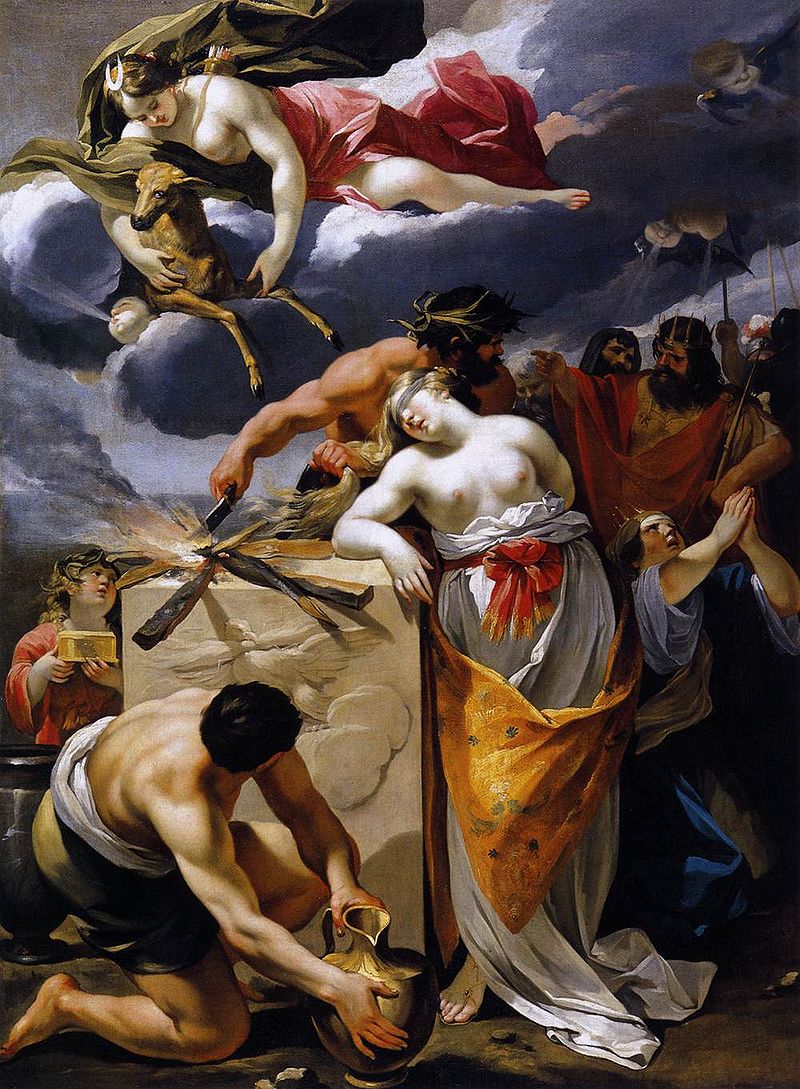
Il sacrificio di Ifigenia [1632 - 1633]
Musée des Beaux-Arts, Dijon