Topic: 2. Sacrifice and religion: Comparisons, Antiquarians, Anthropology (16th-18th Century)
Religious sacrifices across various cultures and contexts sparked widespread interest in Early Modern Europe. As Christianity expanded into regions inhabited by "infidels" and "pagans", Europeans encountered a diverse array of sacrificial customs, ranging from the Sati rituals in India to the Aztec sacrifices in the Americas. This cross-cultural exposure captivated a wide audience, including theologians, philosophers, political thinkers, antiquarians, orientalists, missionaries, poets, artists, and even the general public. These encounters broadened the European understanding of sacrifice and led to a critical reassessment of classical and biblical sacrificial rites. This section includes:
- Sources: A selection of early modern printed materials, which include descriptions of the Americas, Asia, and Africa, alongside antiquarian and philological studies on religious sacrifice in classical antiquity and beyond. It also presents early modern works of ethnological observations and the first attempts to compare different sacrificial practices in various traditions and contexts, laying the groundwork for disciplines like the history of religions and anthropology.
- Iconographic Representations: A rich collection of images from the 16th to 18th centuries, illustrating a range of sacrificial rituals and practices as seen in different cultural and geographical contexts.
- Related Bibliography: An extensive bibliography spanning scholarly works from the 19th to 21st centuries, providing contemporary analyses and interpretations of these early studies and observations.
Martyrdom and the Muslim World through Franciscan Eyes
in: The Catholic Historical Review, v. 97 (2011), issue 1: pp.1-23.
Zum Bedeutungswandel der Begriffe des Opfers und des Opfertodes im 20. Jahrhundert
in: Nachleben der Religionen. Kulturwissenschaftliche Untersuchungen zur Dialektik der Säkularisierung, pp. 225–235
Leiden: Brill, 2011.
0. General bibliography (19th-21th Century) 2. Sacrifice and religion: Comparisons, Antiquarians, Anthropology (16th-18th Century) 3. Sacrifice and politics (16th-18th Century)
Christian Accusation of Jewish Human Sacrifice in early modern Poland: the Case of Jan Serafnowicz
in: Gal-Ed, v. 22 (2010), issue : pp.15-66.
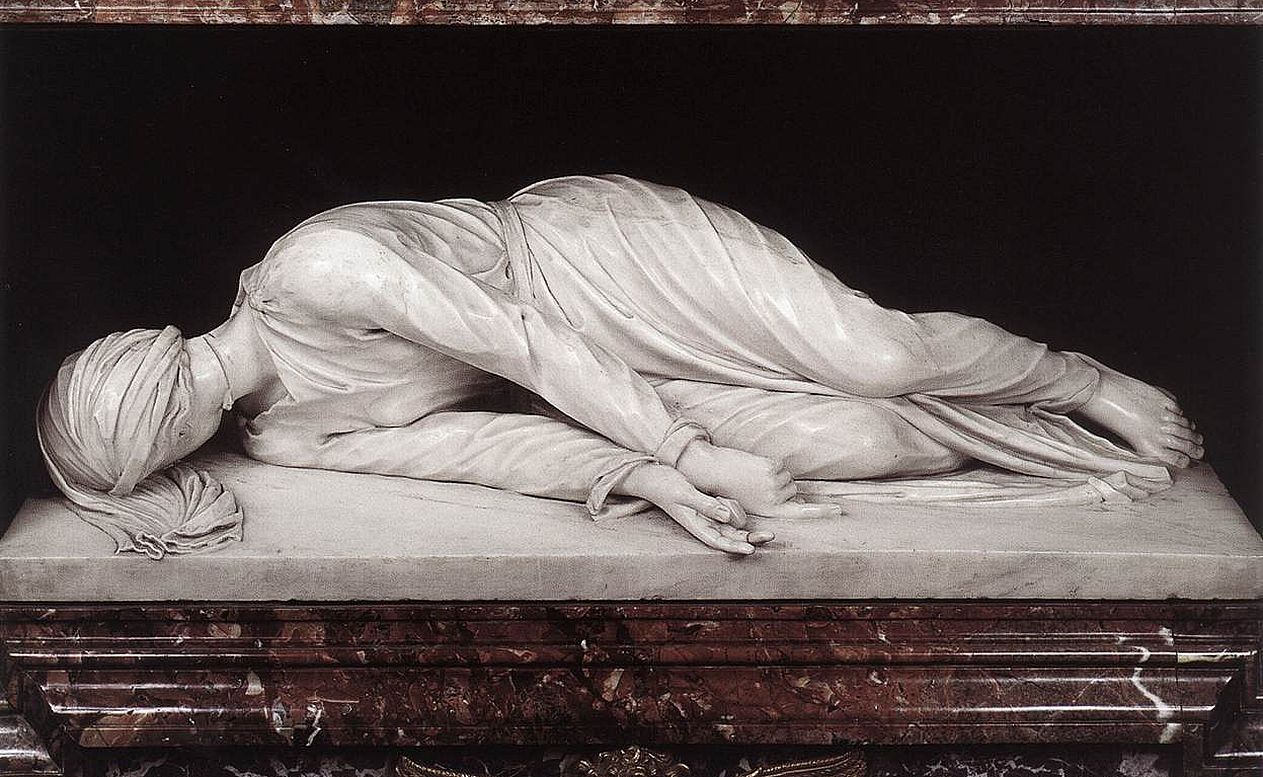
Saint Cecilia (1600)
Basilica di Santa Cecilia in Trastevere, Altar, Rome
La riscoperta dell'esotismo nel Seicento. Le 'Imagini de gli dei indiani' di Lorenzo Pignoria
Pisa: Edizioni della Normale, 2020.
Animals of Sacrifice: Animals and the Blót in the Old Norse Sources and Ritual Depositions of Animals of Sacrifice
in: Myth, Materiality and Lived Religion, pp. 303-307
Stockholm : Stockholm University Press, 2019.
Historia de gentibus septentrionalibus, earumque diversis statibus, conditionibus, moribus, ritibus ... necnon universis pene animalibus in Septentrione degentibus, eorumque natura (Book 3, Ch. 7, On the Geats’ Worship and Sacrifice, De sacrisi, et sacrificiis Gothorum)
Rome: Giovanni M. Viotto, 1555.
Transhumance et rites sacrificiels des Rheraya du Haut-Atlas marocain
in: Sacrifices en Islam: Espaces et temps d'un rituel, pp. 215-237
Paris: CNRS, .
Eclaircissement sur les sacrifices
in: Oeuvres complètes de Joseph de Maistre, pp. 283-360
Lyon: Vitte, 1884.
Eclaircissement sur les sacrifices
in: Oeuvres complètes de Joseph de Maistre, pp. 283-360
Lyon: Vitte, 1884.
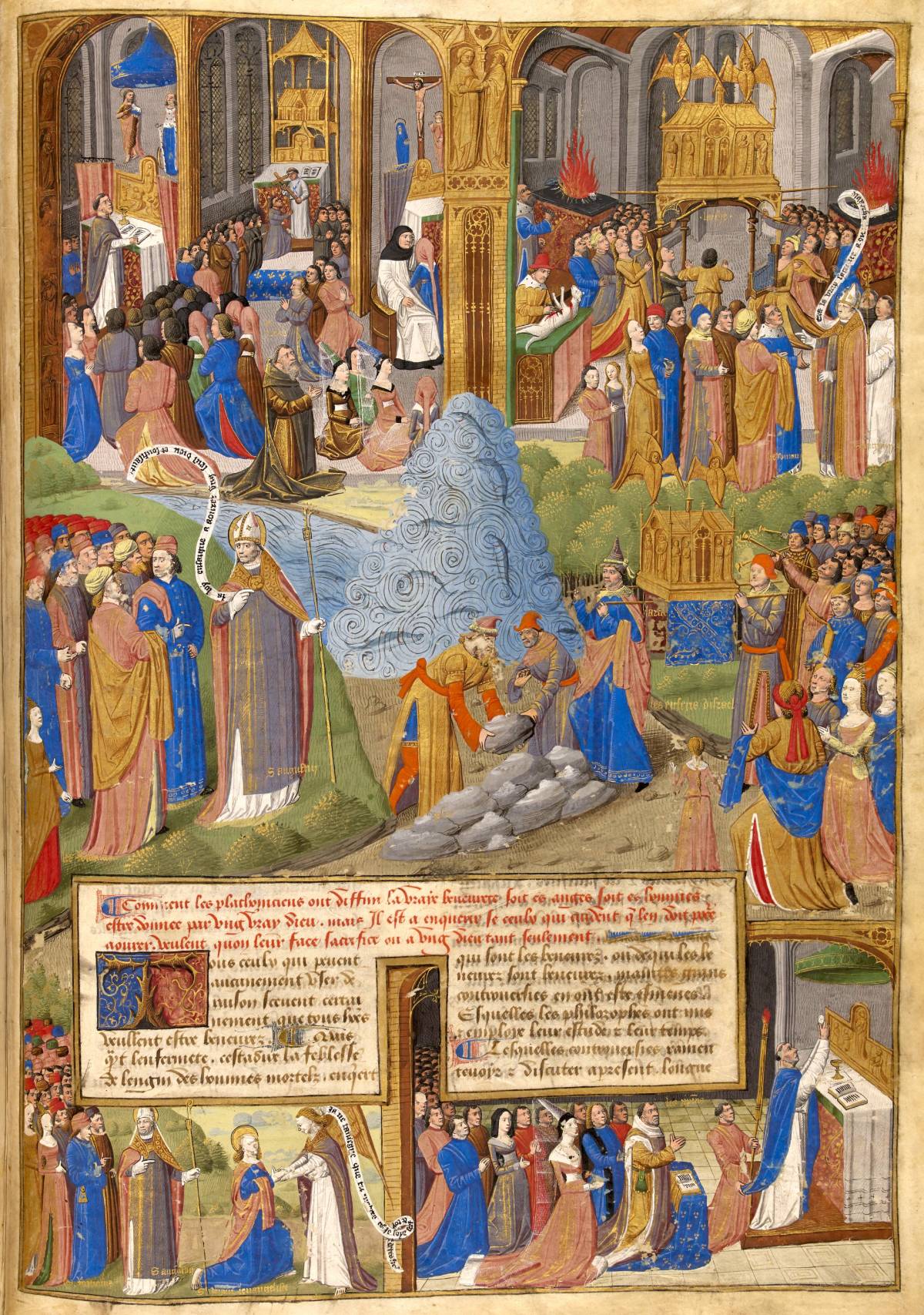
Scenes related to Saint Augustine addressing the Romans, featuring the Mass and, in the upper right, an animal sacrifice in the Temple. Augustine's words on a scroll read: «C'est le vray sacrifice a Dieu agreable». [1480]
from: St. Augustin [Aurelius Augustinus Hipponensis]: La cité de Dieu. Enlumineur Maître de Coëtivy, Traducteur: Raoul de Presles (1316-1382). Miniature at the beginning of book 10
France, Mâcon, Médiathèque et Archives municipales, Ms. 1, fol. 305
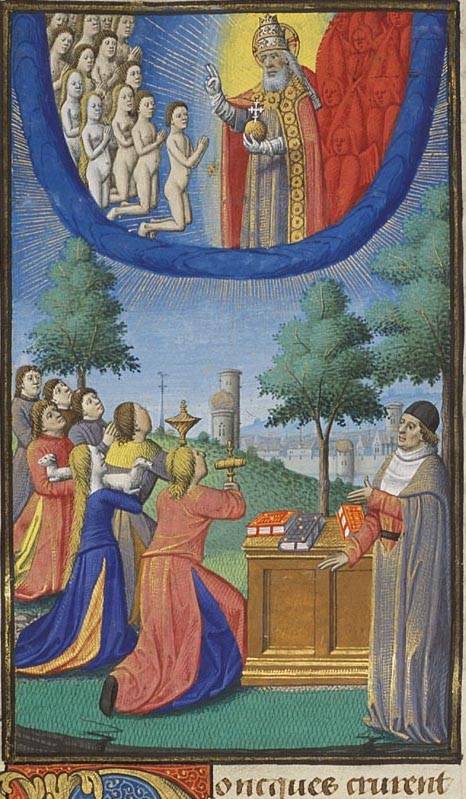
Plato speaks of the sacrifice to God; men and women praying and offering sacrifices
Koninklijke Bibliotheek, National Library of the Netherlands, The Hague
Sati: a historical anthology
New York - New Delhi: Oxford University Press, 2007.
Sovereignty and Social Reform in India: British Colonialism and the Campaign Against Sati, 1830–60
Abingdon: Routledge, 2010.
Cuire le monde: Rite et pensée dans l'Inde ancienne
Paris: Éditions la decouverte, 1989.
Paths of the Knife: Carving up the Victim in the Vedic Sacrifice
in: Indian Ritual and its Exegesis, pp. 1-14
Delhi: Oxford University Press , 1988.
Sacrifice in Zoroastrianism
in: Encyclopædia Iranica on-linehttp://www.iranicaonline.org/articles/sacrifice-i , v. (2010), issue : pp..
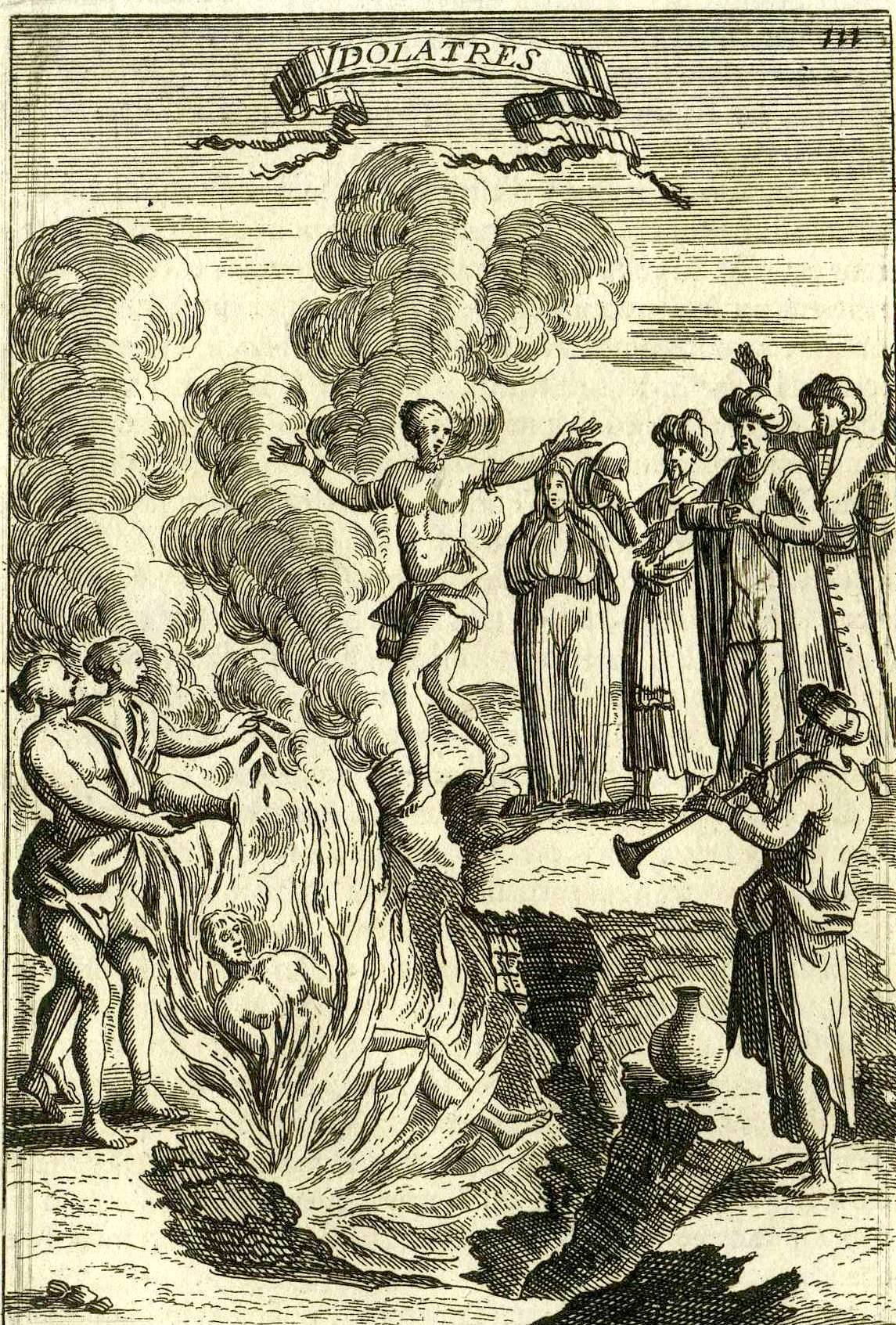
Idolatres (1685)
from: Allain Manesson Mallet, Description de l'Univers, , contenant les differents systêmes du monde, les cartes générals et particulières de la géographie ancienne et modern. Vol.: De l'Asie.
Holocauste in Encyclopédie, ou Dictionnaire des sciences, des arts et des métiers, vol. 8
Neuchâtel: Samuel Faulcher, 1565.