
Topic: 2. Sacrifice and religion: Comparisons, Antiquarians, Anthropology (16th-18th Century)
Religious sacrifices across various cultures and contexts sparked widespread interest in Early Modern Europe. As Christianity expanded into regions inhabited by "infidels" and "pagans", Europeans encountered a diverse array of sacrificial customs, ranging from the Sati rituals in India to the Aztec sacrifices in the Americas. This cross-cultural exposure captivated a wide audience, including theologians, philosophers, political thinkers, antiquarians, orientalists, missionaries, poets, artists, and even the general public. These encounters broadened the European understanding of sacrifice and led to a critical reassessment of classical and biblical sacrificial rites. This section includes:
- Sources: A selection of early modern printed materials, which include descriptions of the Americas, Asia, and Africa, alongside antiquarian and philological studies on religious sacrifice in classical antiquity and beyond. It also presents early modern works of ethnological observations and the first attempts to compare different sacrificial practices in various traditions and contexts, laying the groundwork for disciplines like the history of religions and anthropology.
- Iconographic Representations: A rich collection of images from the 16th to 18th centuries, illustrating a range of sacrificial rituals and practices as seen in different cultural and geographical contexts.
- Related Bibliography: An extensive bibliography spanning scholarly works from the 19th to 21st centuries, providing contemporary analyses and interpretations of these early studies and observations.
De Imitatione Christi et de contemptu mundi
Venice: Johannes Leoviller ; Franciscus de Madiis, 1486.
La methode d’etudier et d’enseigner Chrétiennement et solidement les lettres humaines par rapport aux lettres divines et aux Écritures. Tome II. De l’etude des poëtes, où les divinitez de la fable sont rapportées à l’histoire de l’Ecriture, ou à l’histoire profane, ou àl’histoire naturelle
Paris: François Muguet, 1682.
Passio Beati Simonis pueri
Nürnberg: Friedrich Creussner, 1475.
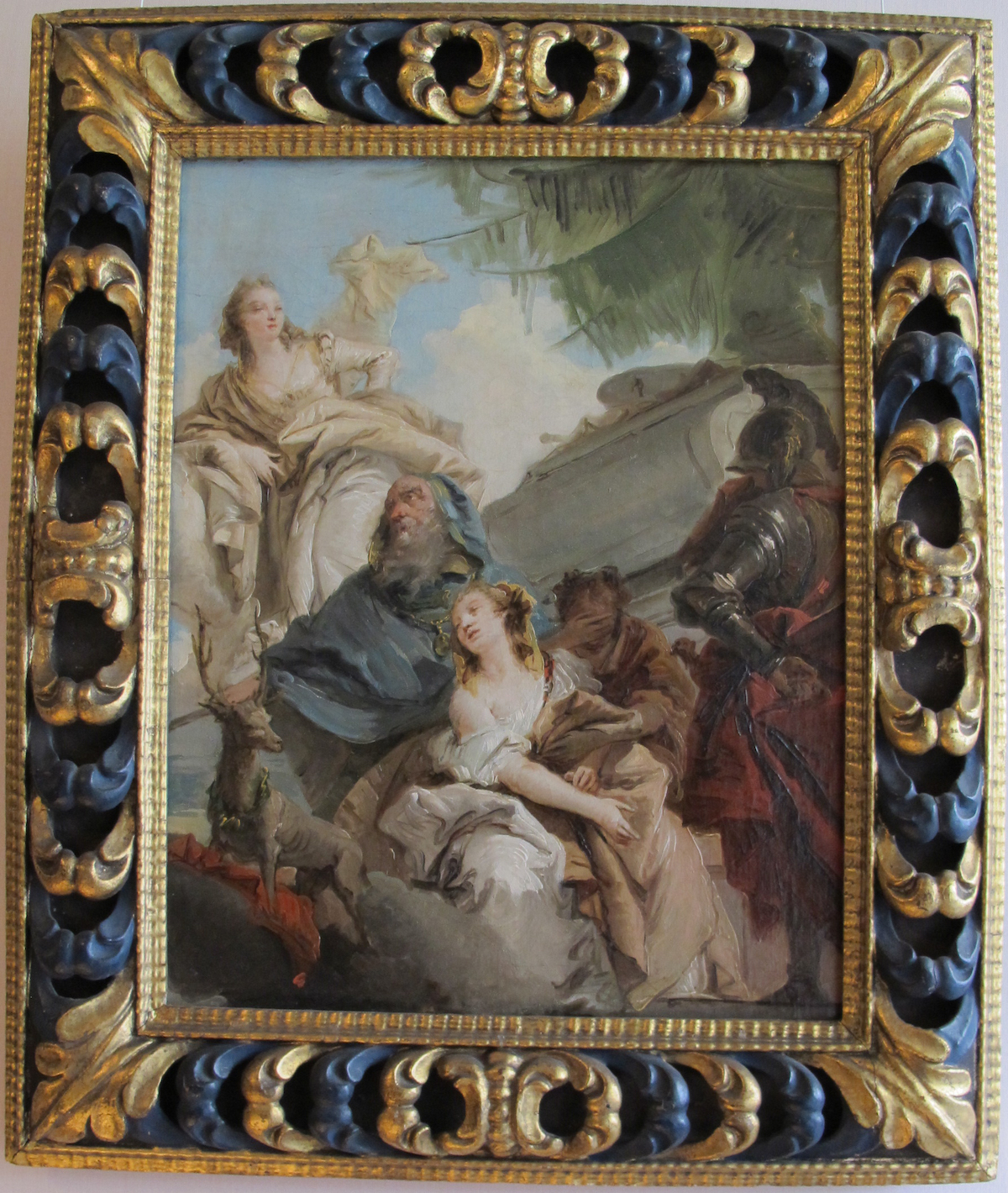
The Highest Altar : the Story of Human Sacrifice
London: Bloomsbury, 1989.

Allegory of the Old and New Testaments and the Church triumphing over the Synagogue (1523)
from: Ferrara, Palazzo dei Diamanti
Ferrara, Pinacoteca
Protestantism, Modernity and the Power of Penetration: Saints and Sacrifice in 17th Century Lutheran Finland
in: Lived Religion and the Long Reformation in Northern Europe c. 1300–1700, pp. 75-103
Leiden: Brill, 2017.
A critical history of the Celtic religion and learning : containing an account of the druids; or, the priests and judges, of the vaids, or the diviners and physicians; and of the bards, or the poets and heralds; of the ancient Gauls, Britons, Irish and Scots /
London: Lackington, Hughes, Harding, 1740.
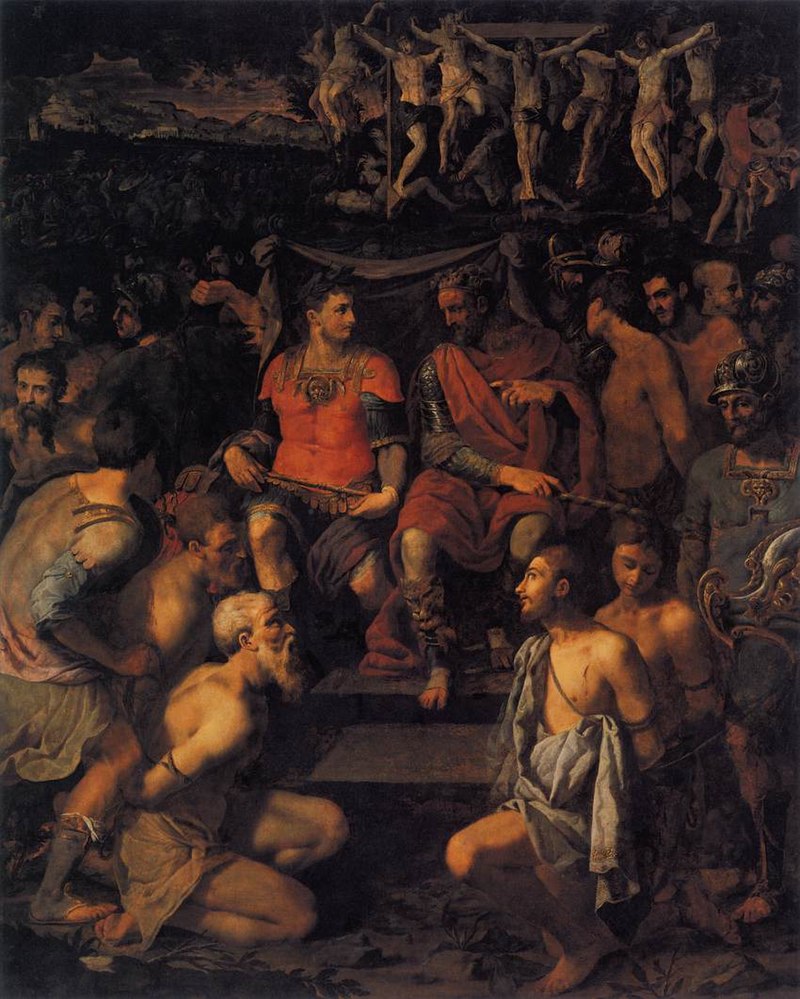
Martirio di sant'Acacio e dei suoi diecimila compagni sul monte Ararat (post 1555)
from: Catalogo generale dei beni culturali
Museo del Cenacolodi Andrea del Sarto,Firenze
Sacrifices dans la ville : le citadin chez le devin en Côte dʾIvoire
Abidjan - St. Maur: Sini, F. - Onida, P. P., 1990.

An Aztec Noble’s Sacrifice for his Country [1585]
from: Codex Ramírez or Tovar - Relación del origen de los indios que hábitan esta Nueva España según sus Historias
John Carter Brown Library
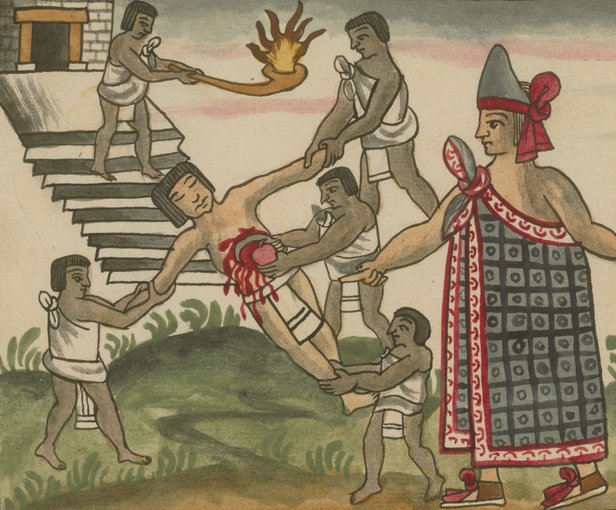
Human Sacrifice in front of the King [1585]
from: Codex Ramírez or Tovar - Relación del origen de los indios que hábitan esta Nueva España según sus Historias
John Carter Brown Library

Skulls at the Temple [1585]
from: Codex Ramírez or Tovar - Relación del origen de los indios que hábitan esta Nueva España según sus Historias
John Carter Brown Library
Bonds of Flesh and Blood : Porphyry, Animal Sacrifice, and Empire
in: Ancient Mediterranean Sacrifice, pp. 214-231
Oxford: Oxford University Press, 2011.