
Dasaratha and his wives perform sacrifices so that they may be blessed with sons.Inscribed on the reverse: ‘Dasaratha Rajah performs Putrakamesti (or sacrifice in desire of sons)
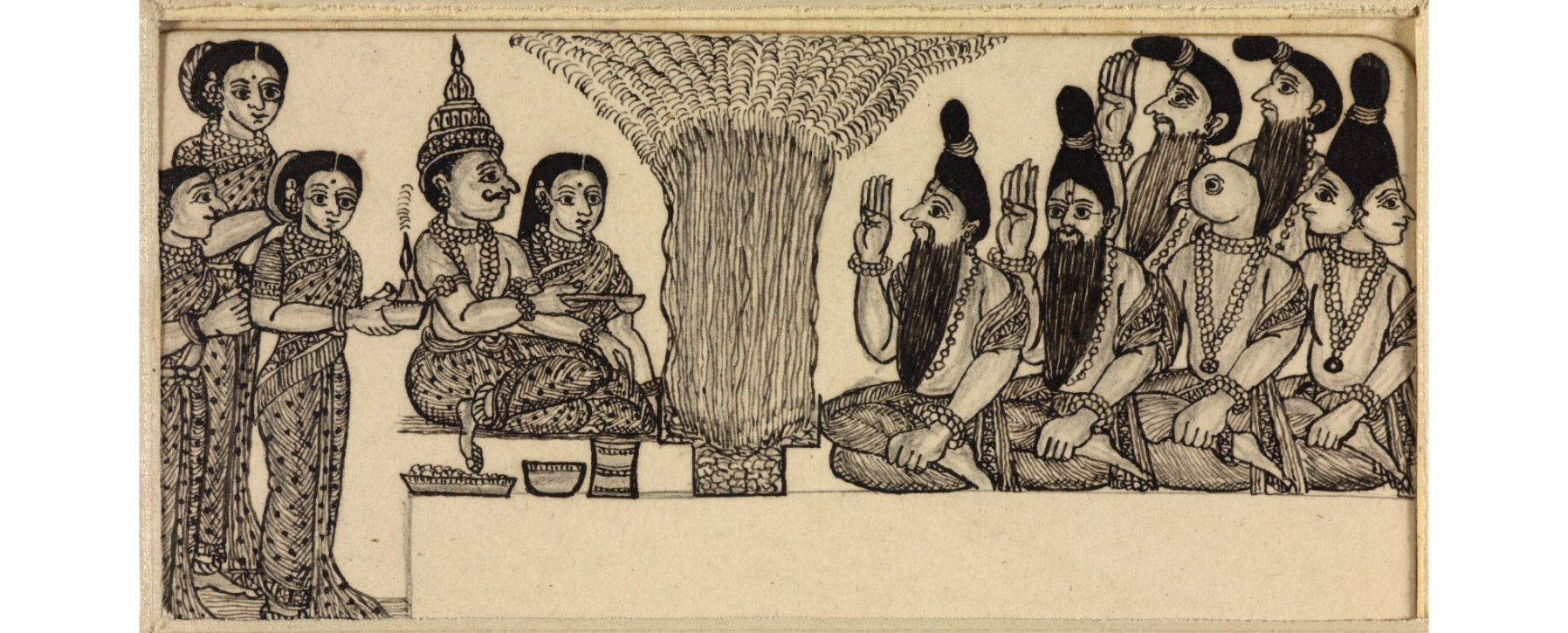
Year: ca 1900
From: Add MS Or 521
Location: British Library, London
External link: www.bl.uk
Related Documents:

Femmes Benjanoises brulees (1725)
from: van der Aa, P. La galerie agreable du monde. Tome premier des Indes Orientales, Leiden, c. 1725
http://www.columbia.edu/itc/mealac/pritchett/00routesdata/1800_1899/hinduism/sati/sati.html
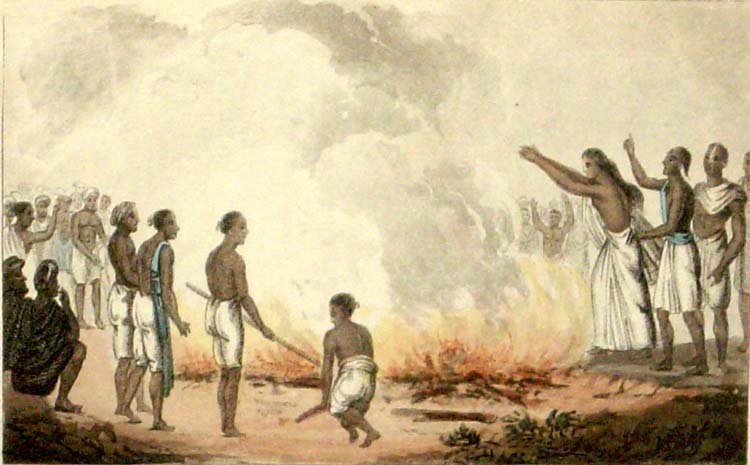
Hindoo Widow Burning Herself with the Corpse of the Husband (1820)
from: Shoberl, F. The World in Miniature: Hindoostan, London, Ackerman, 1820s
http://www.columbia.edu/itc/mealac/pritchett/00routesdata/1800_1899/hinduism/sati/sati.html

Funerailles des Femmes Benjanoises (1725)
from: van der Aa, P. La galerie agreable du monde. Tome premier des Indes Orientales, Leiden, c. 1725
http://www.columbia.edu/itc/mealac/pritchett/00routesdata/1800_1899/hinduism/sati/sati.html
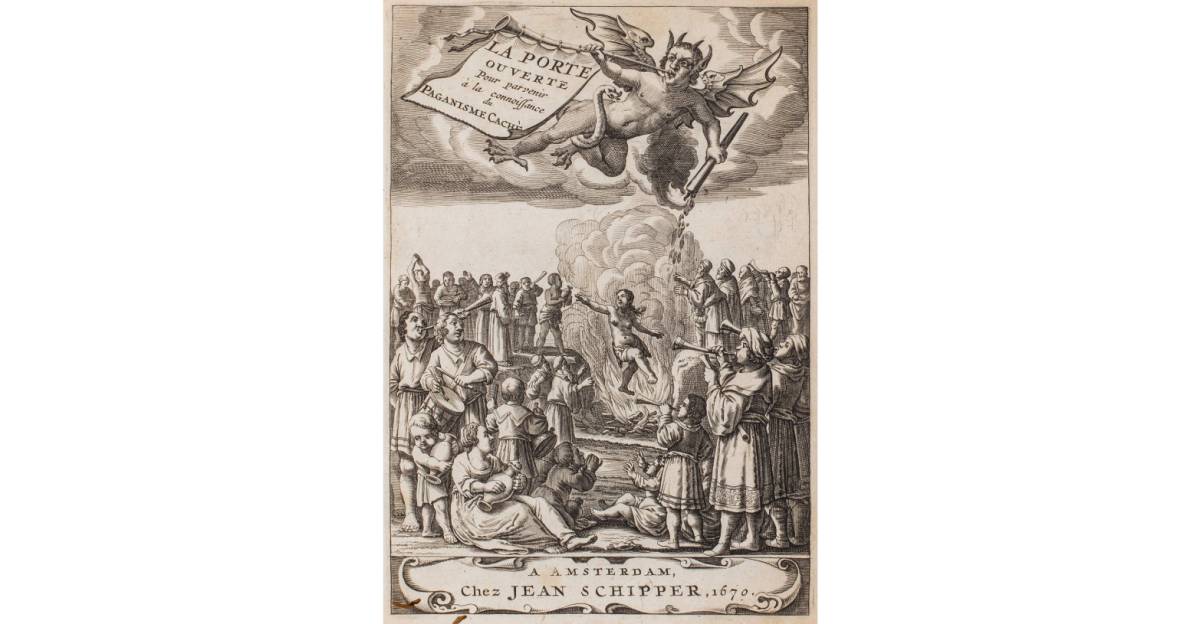
Scene of a Sati, with a woman throwing herself into the flames amid a crowd playing trumpets. Above, a winged devil holds the banner with the book's title and the torch with which he lights the ritual fire. (1670)
from: Abraham Rogerius, Le Théâtre de l’idolatrie ou la porte ouverte, Amsterdam, Jean Schipper, 1670, title page

Les veuves du Cormandel (1725)
from: van der Aa, P. La galerie agreable du monde. Tome premier des Indes Orientales, Leiden, c. 1725
http://www.columbia.edu/itc/mealac/pritchett/00routesdata/1800_1899/hinduism/sati/sati.html